
Earthquakes in the Region: Why Prefabricated Houses Are the Safest Solution
Author
Marko
Date Published
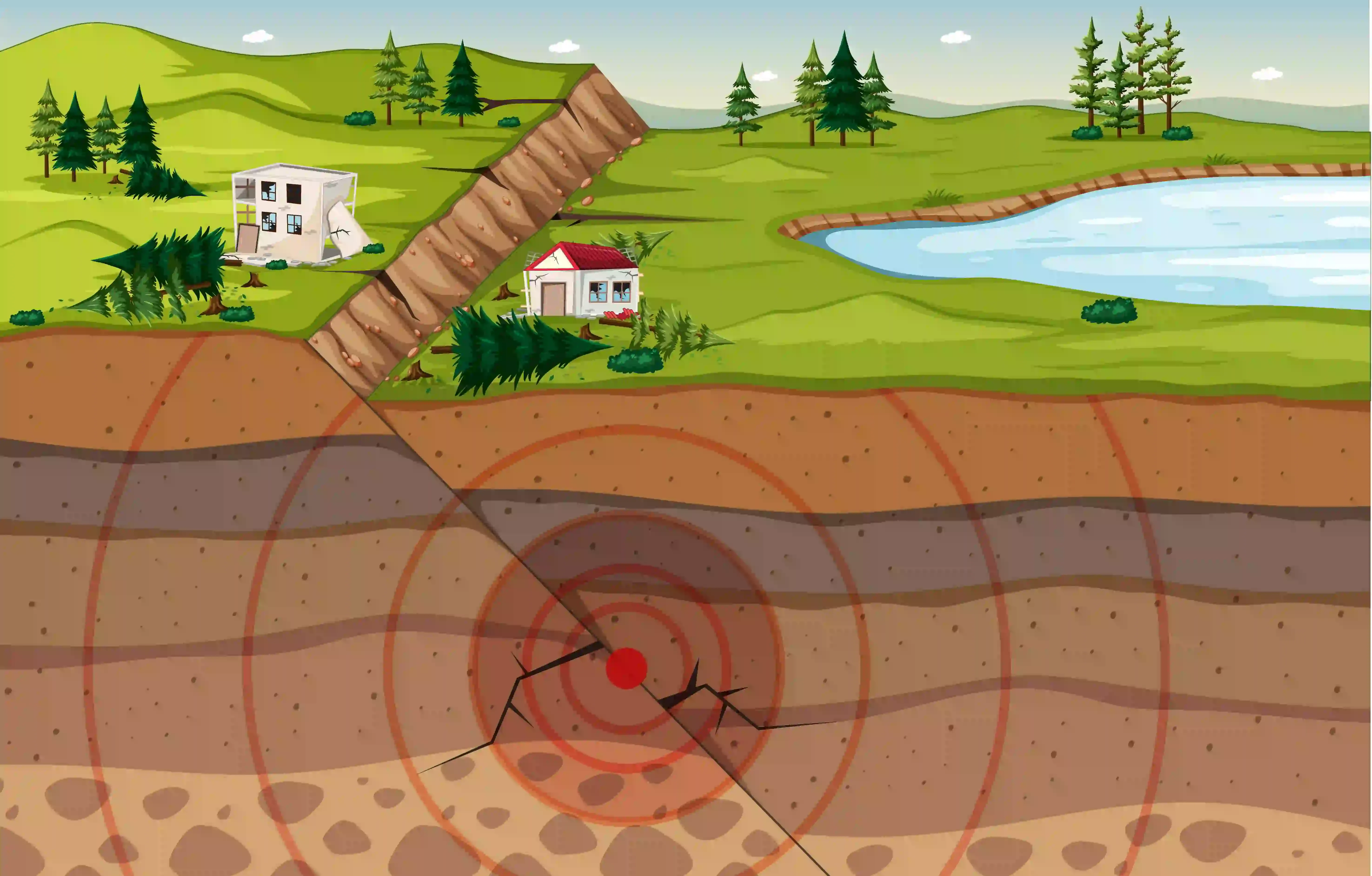
Year after year reminds us of the raw power of nature, and frequent seismic activity across the Balkans, including tremors in central and southern Serbia, keeps many families in justified fear.
When the ground starts to shake, your home stops being just a place to rest and instantly becomes your only shield. In such unpredictable situations, every family faces the single most important question: are the walls around you truly capable of protecting what you value most?
Although many people, out of old habit, believe that massive concrete and heavy blocks automatically mean the greatest safety, modern engineering in 2026 conclusively proves the exact opposite.
State-of-the-art prefabricated houses today represent the absolute safest shelters that the global construction industry can offer. Thanks to smart material technology and clear laws of physics, these homes are incomparably superior to traditional masonry construction. In this article, we will explain to you, in a very simple and understandable way, why a top-quality prefabricated house responds to tremors by far the best and guarantees maximum peace of mind for your household.
The Rigidity of Concrete versus the Elasticity of Wood
When engineers and seismologists analyze how buildings behave during an earthquake, it all comes down to one incredibly simple physical property, and that is the material's ability to adapt.
To best understand this, picture a thick, dry branch and a young, flexible reed under a strong gust of wind. The rigid branch will snap instantly under sudden pressure, while the reed will simply bend down to the ground and then return unharmed to its original position. It is precisely this natural law that perfectly explains the key difference between the dangerous rigidity of concrete and the life-saving elasticity of wood.
Why Does a Traditional Masonry House Crack?
Traditional masonry construction has relied for centuries on extremely heavy and completely rigid materials. Brick, block, and reinforced concrete are, by their very nature, maximally rigid. When a devastating earthquake strikes an area and the ground begins to move violently, those rigid materials simply cannot follow the movement of the ground beneath them.
Because of that fatal inflexibility, the enormous seismic energy strikes directly at the core of the structure itself. The walls have nowhere to release that pressure, so the consequences are extremely traumatic and costly.
This leads to terrifying cracking of load-bearing walls, mass shedding of the facade and plaster, and in the worst-case scenario, the complete collapse of the building under its own weight. At that moment, a masonry house stops being protection and becomes the biggest threat to the lives of those inside it.
The Flexibility of a Timber Structure
As opposed to the outdated and rigid way of masonry building, a state-of-the-art prefabricated house uses the noblest and technologically most intelligent building material on the planet - wood.
A top-quality, precisely engineered timber structure possesses an incredible natural elasticity that modern engineering brings to absolute perfection.
During a strong earthquake, the timber frame of a prefabricated house will not directly resist the force the way concrete does. On the contrary, the entire structure will simply "sway" slightly, masterfully cushioning and absorbing even the most brutal shocks from deep within the earth.
Once the tremor has passed, a well-designed prefabricated house calmly and completely safely returns to its original position, without a single crack in the walls.
It is precisely this remarkable shock-absorption capability that places state-of-the-art prefabricated houses among the absolute safest and most protected living spaces available today.
Why Is Lighter Actually Safer?
One of the biggest, and at the same time most dangerous, misconceptions in our region is the belief that mass automatically guarantees safety.
Many people instinctively think that heavy, thick walls will best protect them from all outside influences. However, when we talk about seismic safety, the harsh truth and the unforgiving laws of physics show us exactly the opposite picture.
In the event of an earthquake, a building's enormous weight is not your ally - it's your greatest enemy.
How a Building's Weight Attracts Destructive Force
To understand this in the simplest possible way, it's enough to apply one very simple and logical law of physics, which states: the seismic force striking a building is directly proportional to its mass.
Did you know? The seismic force striking a building is directly proportional to its mass. Prefabricated houses can be several times lighter than masonry ones, meaning the destructive force acting on them is incomparably weaker!
In other words, the heavier a building is, the stronger the destructive force acting on it during a tremor.
A traditional masonry house represents hundreds upon hundreds of tons of heavy concrete, brick, and block. When the ground suddenly and violently shakes, all that enormous, rigid mass creates terrifying internal pressure.
A masonry house literally begins to fight against itself, and under the incredible burden of its own weight, it inevitably cracks, breaks, and ultimately collapses.
On the other hand, modern prefabricated houses can be several times lighter than traditional masonry buildings.
This engineered lightness of top-quality materials represents by far the strongest defense.
Because of the drastically lower overall mass, the force with which an earthquake acts on a prefabricated building is incomparably weaker. The house experiences absolutely minimal pressure and remains completely statically relieved. Instead of resisting and cracking, the lightweight structure works perfectly in tandem with the ground movement, guaranteeing that the occupants remain maximally protected and completely safe under their own roof.
How Do the Panels Stay Firm When the Ground Shakes?
Besides the perfect materials and the laws of physics, the third, and perhaps most important, factor in seismic safety lies in the engineering itself and the way the house is assembled.
The details of top-quality factory production and the way the elements are connected on site make an incredible difference at the moment the ground begins to shake violently.
A Network of Steel Anchors and Perfect Stability
When you strip things down to their essence, a traditional masonry house is really just stacked brick or blocks held together with ordinary mortar.
When a tremor hits and the ground begins to shift, that mortar is the first thing to crack. The bonds between the heavy blocks instantly disappear, and the walls lose all structural support, begin to separate, and eventually collapse one by one, bringing fatal consequences.
A prefabricated house, on the other hand, represents an incredibly intelligently connected system.
Under strictly controlled factory conditions, engineering perfection is created, where absolutely nothing is left to chance. During assembly, every single wall panel is bolted directly and extremely firmly to the reinforced concrete foundation using massive steel anchors.
After that, all exterior and interior walls are firmly connected to each other into a fully compact whole, while the roof structure additionally "locks" and secures the entire timber frame from above.
Thanks to this dense and precise network of steel and timber connections, a state-of-the-art prefabricated house does not experience a tremor as a collection of separate walls. During an earthquake, it behaves as one single, unbreakable, indestructible cube. This brilliant engineering approach provides ultimate stability and guarantees that the house will not collapse, regardless of the force of the natural disaster.
Your Home Must Be Your Safest Refuge
When nature plays its hand and the ground shakes, there is no more room for compromises, excuses, or second-guessing bad decisions from the past.
In those critical moments, your home must be your safest refuge, not a source of panic, danger, and stress.
While a traditional masonry house, weighed down by its own walls, represents a potential threat, a perfectly engineered prefabricated house provides absolute peace of mind and, most importantly, directly protects the lives of your loved ones.
Your family deserves a home where they can sleep completely worry-free, regardless of what's happening outside.
Don't leave your safety to chance and old misconceptions. Contact us today, schedule a meeting, and let us build you an indestructible fortress that will protect you for generations!